

It’s no secret that I was not a big fan of Seven. I grew up with plenty of dogs, though my wife did not. We’d had our own dog, Seamus, an incredible Chow/Shepherd mix, for over 15 years and we loved him well. Seamus had been dead for at least…

Don’t Bother Creating Unless You Absolutely Have To
Unless you feel compelled to act, beyond anything that is reasonable, logical, or sensible, you shouldn’t bother. As a famous actor once said, “If you can imagine yourself doing anything else, you should go do that.”

An Uncomplicated Life
Life is complicated. I suspect it always has been. Throughout human history, if you weren’t dealing with technologically-induced societal disruption, you were fighting class hierarchy, strict social oversight, ecological disaster, infectious disease, and apex predators. No one gets off easy. It’s just the way it is.

We All Want To Be Told Who To Like, How To Think, And What To Do
Human beings lie. We lie all the time. We lie to each other. We lie to ourselves. It is part of what makes us human. We are not entirely alone within the broader animal kingdom, as there are plenty of other species who use various forms of deception, pretending to be something they’re not. It’s just that they usually do so as a defensive mechanism against would-be predators. Most creatures, do not try to deceive other members of the same species, let alone themselves. We seem to have a lock on that little peccadillo. Well done, us.

A Change In Seasons
I enjoy the change in seasons, and fully embrace the shifts in weather on a semi-reliable timetable. Unlike places such as Southern California, where it changes ever so slightly, and no one really notices. I’ve been in LA when it gets slightly cooler for a few days and the locals…

Nobody Knows Anything, And Other Things I’ve Learned
I’m going to be 59 years old in a few months. I find this to be unfathomable. That’s just shy of sixty, which is absolutely ludicrous and not at all believable, or even remotely humorous. That’s old people territory. This is when you join a cohort of shuffling geriatrics who get cheap movie theater tickets, free rides on the bus, and pudding for dessert. Old as fuck, as the kids like to say.
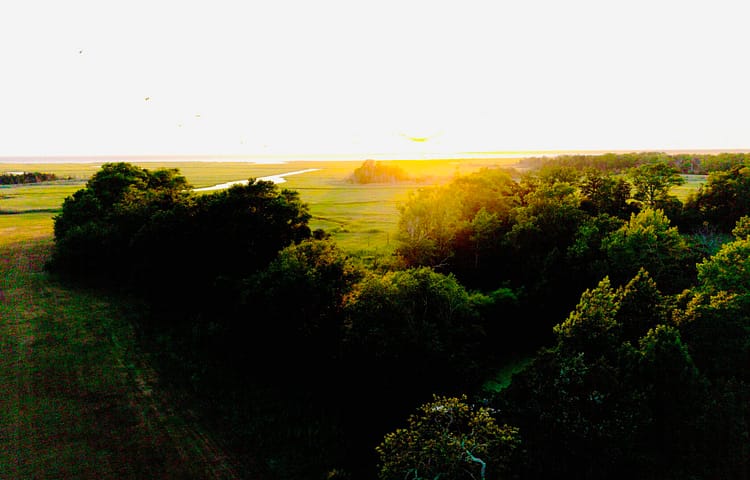
Life On Goshen Landing Road
I live at the confluence of a busy two lane highway and a dead-end country road in a house that was once an early 18th-century tavern and stagecoach stop on the way from Philadelphia to Cape May. The busy road is a major artery on the bay side of our peninsula, and is the backcountry alternative to the Garden State Parkway.

I’m Not Writing Less, I’m Trying To Publish More
A modest explanation for why it might seem as though I am writing less even though I am doing more At the height of my writing productivity, some years ago, I was publishing one to two essays a day on the blogging platform Medium. I was churning out work at…

Daily Drinking And The Power Of Peripheral Thinking
I get bored with reality and I miss having a reliable mind-altering experience to look forward to at the end of the day. There’s only so many times you can dip into the coffee pot for your daily dose of a little thrill and there’s nothing waiting for you at the end. No little treat. How do you know when your workday is done if you don’t change your mindset with a little altered reality? That’s the real habit that’s difficult to break. This is why recovering addicts turn to sweets and nicotine. The lesser of evils, or so they imagine.

Separating My Politics From My Art
Back when I published a few digital magazines on Medium, it didn’t take long to learn that political writing didn’t fit all that well with my vision for what the magazines should be. Politics was an important topic to me, as it should be to everyone, but it was often so toxic and volatile that it contaminated the rest of the work. Ultimately, I created a separate publication just for my political writing, and opened it up to others. For a time, it was an effective outlet, then the country elected an orange buffoon and I put my head under the covers and stopped reading any news, or commenting on it.