Part of a series of essays on New Orleans.
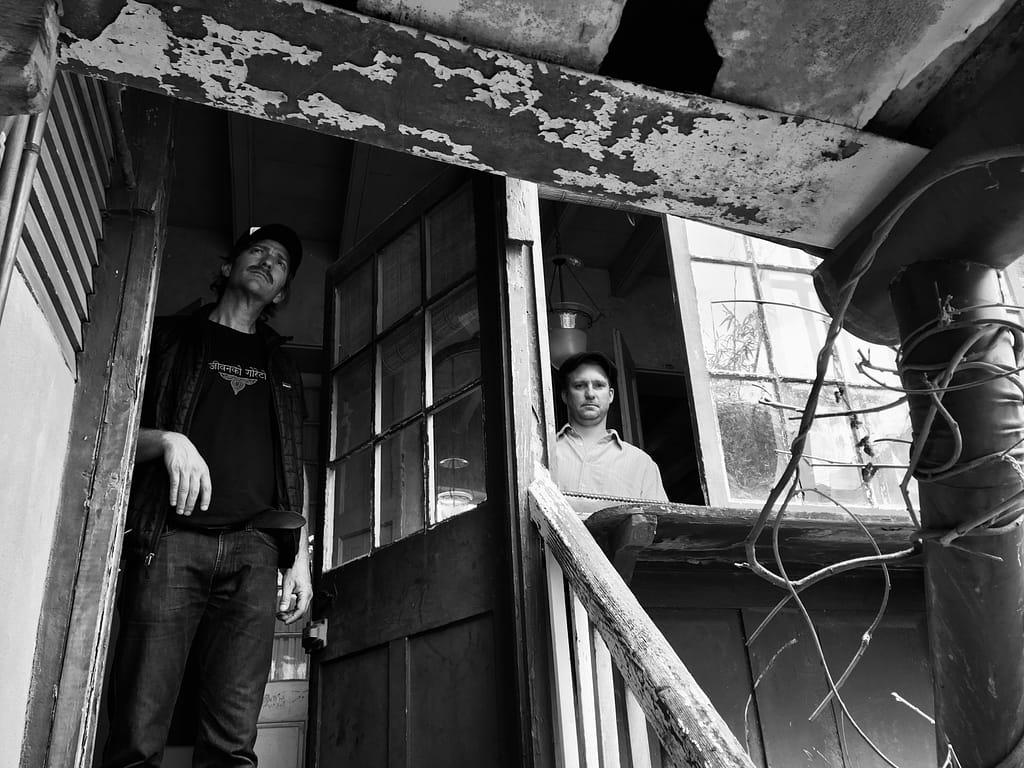
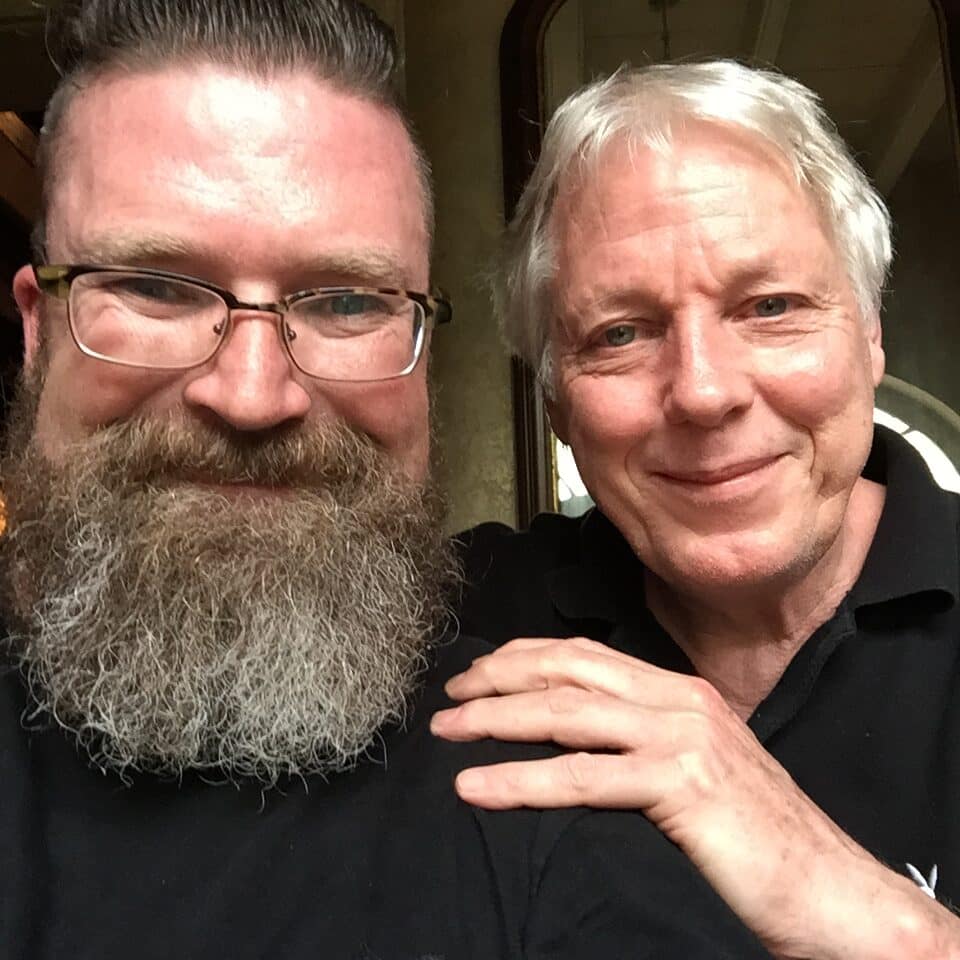
Peter is a character. This does not make him special, or even cause him to stand out in a city such as New Orleans, which is filled to the brim with characters. It is, in fact, a city of characters, as much as the city itself is a character, but in what sort of tragic comedy or morality tale it’s hard to say. Peter is a character playing the part he was born to play in a city that requires characters like other cities require space, water, and air.
Peter is a product of his environment, a character born, no doubt, to a family of characters. He claims to be eighth-generation New Orleanian, and the third generation to occupy the same house. He inherited the home from his grandmother Rita Hovey-King, the founder of Hové Parfumeur, when he was sixteen, and has lived there ever since.
Peterson “Peter” Moon Yokum is an artist and occasional musician, but I always got the feeling that his real profession was being a Southern aristocrat in the old tradition, being the product of inherited wealth from an old New Orleanian family. He appeared to live simply and without airs, scraping by on the generosity of others so that he was rarely forced to do any real work.
He is local royalty and as a member of an old world family, has risen to the challenge with grace and aplomb. Moon is a family surname, his mother’s maiden name, and not some hippie vestige from a later era. Peterson, too, is a family name, passed down through generations of men. Peter is nearly a caricature of a local, but made of flesh and blood, and in fact, quite real. He’s a living, breathing, apparition of history, and it was thrilling to get to know him a little, in the way it would be exciting to meet someone from the 19th century.
Peter was in his late sixties when I first met him, born in 1949, but it’s often hard to judge the age of the people here in Crescent City. This was back in 2015, and even then he had the mischievous swagger of an imp, and anything that came out of his mouth, no doubt had a soupçon of truth, but was not what I would call especially trustworthy. Peter had tales, not all of which seem grounded in reality. He was a trickster in the classic sense, and yet seemed to be sucking the marrow out of life, albeit at a glacial, Southern pace.
I came to know Peter through my own work, but also happenstance. I was in New Orleans to scout a location for a short film I was directing for a fashion client in Detroit. I had been watching the HBO series Treme and was suddenly drawn to the history and culture of this magical city. I had only been to New Orleans once, back in 1991 for a record release party for the band Cinderella while I was working for Universal Records in my early 20s.
It struck me, at the time, as a party town, but not much more. I had no frame of reference and had yet to travel much. I didn’t have any insight into the crazy narrative of this exotic American city. I was mostly impressed by the fact that you could walk out of any bar with a full drink, and they would simply give you a plastic to-go cup to keep you sustained as you stumbled on down the road.
We began by looking at a number of homes in the Garden District, large, beautiful homes that had been carefully maintained and were mostly in pristine condition. They were often surrounding beautiful parks with ridiculous sloping trees with limbs that touched the ground. They all had low porches, enormous windows that reached the floor, and stately columns. They were gorgeous and stunning, but they lacked true personality outside of being quintessential examples of New Orleans architecture. They were too nice.
He was a trickster in the classic sense, and yet seemed to be sucking the marrow out of life, albeit at a glacial, Southern pace.
Most of the homes on our list of locations to scout were of the same ilk, but there was one outlier that felt promising. An old dilapidated house in the French Quarter that seemed to be crumbling before your very eyes. It was more patina than solid structure, as if the peeling paint was one of the things holding it all together. I was unsure if I could convince my client that this was the right move, but secretly, I hoped it would live up to expectations. It looked to be something from another time.
Upon finally touring it, I was immediately smitten, both by the house and by its story. It’s greatest historical achievement was that it had remained largely untouched and unchanged. It was once used as a location for the 1997 film Lolita, as well as for a scene in Oliver Stone’s JFK, and has been used for countless other commercials and films such as ours. I was told that Joe Pesci’s character from JFK is killed in one of the upstairs bedrooms, but I never saw the movie.
Peter’s home is on the same block, but the opposite side, of Preservation Hall, the legendary music hall, as well as a neighbor to The Court of Two Sisters. It is one of the oldest homes in the French Quarter. Originally built in 1722, it fell victim to the Great Conflagration of 1788, was replaced by a small, single-story home, then was razed and rebuilt in 1807 by architect and builder Hilaire Boutté. It was, for a time, a gunsmith shop on the first floor with an apartment above, but then in the 1930s became the home of Hové Parfumeur, a business started by his grandmother after his grandfather’s untimely death in his 60s.
The home itself is a two-story, four-bay Creole, Post-Purchase plaster covered brick structure featuring wrought iron balconies, ornate mantels, high ceilings, and a grand courtyard full of banana trees. It’s a classic example of Spanish and French colonial design, but is most noteworthy for how little it has changed. Peter is a disciple of the Patina Style, whereby he keeps everything in good working order, but allows it to decay as it wishes. This includes paint worn off or peeling from nearly every surface.
Historical records refer to it as Casa Flinard, which is apparently a mistaken spelling of Hinard due to misreading the ancient flourishes. The plaque on the exterior now reads Casa Hové, in honor of the family matriarch’s legendary French Quarter perfumery.
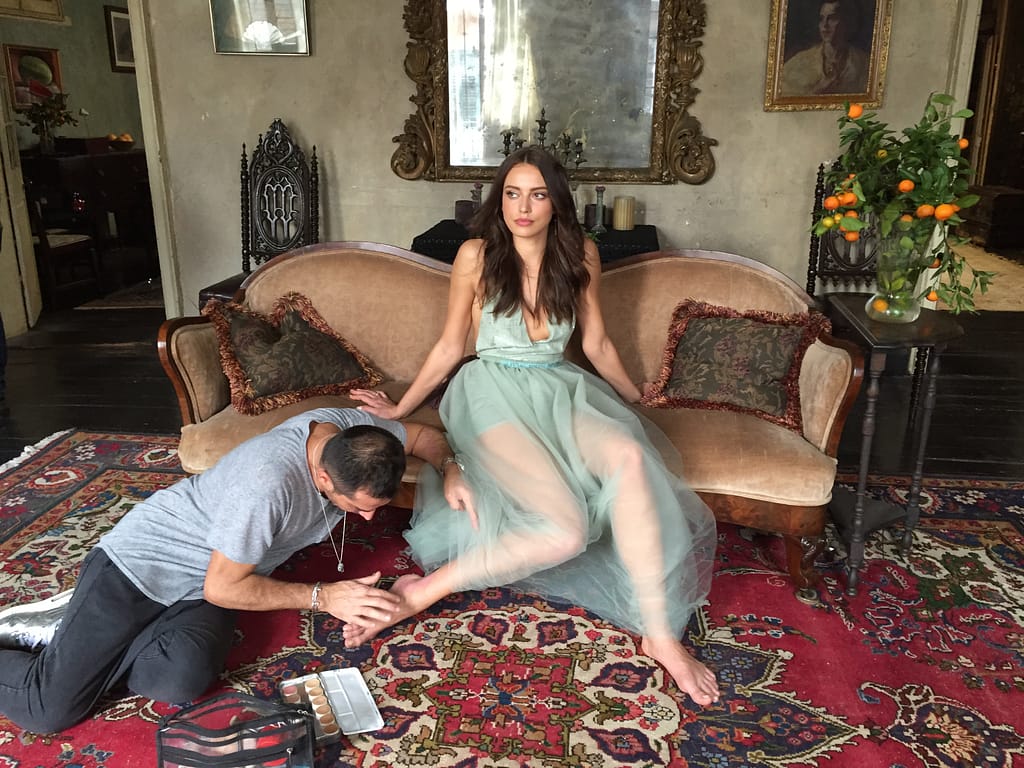
The house itself is a time capsule, with the first floor traditionally being a commercial space. It was, as I said a gunsmith shop originally, then later became the original location of parfumeur, before becoming Peter’s art studio and showroom. The second floor features a great room in the front, with three sets of doors tall doors opening onto the iron-wrought balcony. Behind that are two rooms, one set up as a bedroom and the other as a dining room. In the back is a tiny kitchen and a parlor that leads to another balcony overlooking the courtyard.
The front gates on the first floor open to the porte cochere that led to the courtyard, called The Money Gates because they came off the old US Mint, and are said to bring good luck to those who rub them. The original gates were said to have been melted down to make bullets during the Civil War.
Inside are all manner of antiques, most, if not all, of which are family heirlooms and include a saber, musket, and an enormous painting of his mother when she was a debutante. While it was very clean, everything appeared as though someone had boarded up the place a century ago. The most memorable thing about the place was the paint peeling from the ceiling in large flakes throughout.
We shot there all day with a crew of roughly 25 people and when we were done, I had someone run out and get a bottle of mandarin vodka that we shared with Peter, while he supplied the fresh mandarins that he was using to decorate the parlor. The ice came from his tiny icebox, out of metal trays, and completed the milieu perfectly.
This was always one of the great pleasures of my work, the opportunity for access to places and people I would not have otherwise had. I feel like I got an inside glimpse into a world that would have otherwise been hidden to me. While the rest of the crew was packing up, we sat in the little parlor off Peter’s kitchen, the table decorated with flowering mandarin branches, and sipped cocktails made with fresh squeezed juice by a creature from another plane of reality.
The air was perfumed by orange blossoms and jasmine, banana trees and centuries of dust and grime, and I realize now that perfume was in his blood, so it could only be so. Later, he would show up at our invitation and share a drink on Pirate’s Alley, at a little corner bar near where Faulkner used to live and write, and regale us with tales of his own, full of sound and fury.