
As the enshittification of the internet hits its apex and begins to collapse under the weight of a tsunami of AI slop, humanity may very well find itself back where it started, rediscovering the genuine world of books, art, music, travel, entertainment, food, and nature. Authentic experiences that have the ability to connect us emotionally and communally, leaving lasting impressions that stay with us long after the experience has ended. It’s how we evolved as a species, and probably does a lot to explain the cognitive dissonance we feel when faced with our current state of affairs.
We’re literally not wired for this shit.
“Nostalgia for the small town need not be construed as directed toward the town itself: it is rather a quest for community.”
— Max Lerner
We won’t really go back. There’s no such thing, and not how any of this works. The nature of the universe is forward progress, not regression, but we can still rediscover ancient truths and relearn old ways of doing things, incorporating them into our modern lives. It happens all the time. It’s merely hubris that keeps us from recognizing the wisdom of the past and assuming that if it’s not new, it can’t be better, or even good. We are regularly reinventing the wheel, claiming the discovery as our own, and shouting, “Hey, look what I did!”
Rediscovering Old Ideas
I was rereading a book this morning from the founders of Banana Republic, the clothing store that Mel and Patricia Ziegler started in 1978. Before they sold the business to The Gap in 1983, they specialized in safari-style travel-oriented clothing and gear that enjoyed a huge boost from the explosive popularity of the Indiana Jones franchise. You had to get that jaunty fedora somewhere.
Back in the early days of their mall stores, you’d usually be sure of finding an old Jeep used as a prop, and racks lined with a lot of khaki, linen, and canvas. It had the feel of walking into the J. Peterman catalog of Seinfeld fame.
The book I was reading is about the project the Zieglers started after they sold their clothing brand, called “The Republic Of Tea.” The book has the subtitle: How An Idea Becomes A Business. That’s the part that interested me the first time I read it. I loved the concept of exploring how an idea becomes a business.
“Creativity can leave people with the idea that they are ‘creative,’” the book begins. “This is the cultural hubris of the Western world—that I create. Interestingly, the ancient Sanskrit language has no equivalent of the word ‘creation’ as we use it to mean ‘something that comes from nothing.’ The fact is that creation is a projection of what already exists. What I am saying is that The Idea already exists but has not yet been made manifest. It is a projection looking for a screen—and we are that screen.”
If we accept this as true, that there is literally nothing new under the sun, just things we have yet to discover or unearth, then it’s reasonable to assume that we exist in an endless cycle of discovery and loss and rediscovery.
Innovation Versus Progress
I don’t think the answer to our current crisis is as simple as assuming analog is better than digital, or that older tech is somehow better than newer tech. That’s absurd. But we should recognize that technological innovation does not always translate into social progress. In fact, it’s often quite the opposite.
The automobile was a huge boon for the economic fortunes of many an industry titan, but its widespread adoption resulted in an entire society designed around its existence, and none of that has been good. Whole cities, towns, and neighborhoods are now built to accommodate cars, not people. A lot of people made a lot of money, but I wouldn’t call that progress.
We have too many cars and not enough room, and the answer to that has been to invent self-driving cars, rather than recognize that the mass transit concepts of old would be more practical for moving so many people. We should be looking at buses, trolleys, and trains, not automated cars and gas-guzzling planes.
That’s still touching on more of an economic or environmental problem than a social one, because the real problem is that cities and suburbs have become unmanageable and disconnected because they are built to accommodate the single passenger car. We have lost touch with authentic experiences that bring people together because we have been seduced by the promise of detached, impersonal, virtual worlds. We are drowning in isolation, surrounded by a community of lonely people.
Authentic Experiential Immersion
The central problem we’re facing today is social isolation, not technological innovation, but it is our immersion in fabricated realities that has created this dissonance. We were promised community, but are fed an endless algorithm of doom-scrolling and virtue signaling instead. We can travel the world, seeing everything, but experiencing nothing. We can find others who agree with our worldview, revel in our niche interests, and choose a bubble of our own making, but we are alone. We are free to create the perfect rut from which we can not escape, forced to view ad after promotion that antagonize our feelings of inadequacy, and we call this social.
The answer is not complicated, nor does it involve an elaborate strategy to reimagine society. It is simply a return to form and a logical correction to what has been a disaster for young people. These so-called digital natives are going to be the ones who lead us back to the promised land as they reject the isolation and artificiality of the world we’ve presented to them.
Rather than FOMO, they are aspiring to JOMO, the joy of missing out. They want to disconnect from the virtual and reconnect with the natural world, rediscovering immersive experiences that excite the senses. They’re not just trading their screens for a window; they are opening the door and going outside.
In my own life, I’m already seeing this trend through the lens of my hospitality clients who are leaning into their offerings as sensory-driven, experiential destinations. The luxury brands have always tried to differentiate themselves with high-touch service experiences, but even budget-conscious groups are turning to live events, immersive experiences, and outdoor activities.
It’s the experience that people want, even more than the actual product or service. They don’t just want a room for the night; they want an experience that will create lasting memories they can take with them. A place to lay their head is no longer enough. If they can’t afford your mountain lodge, they’ll opt for a tent with a view. It’s no longer just about the money; it’s about a life well-lived.
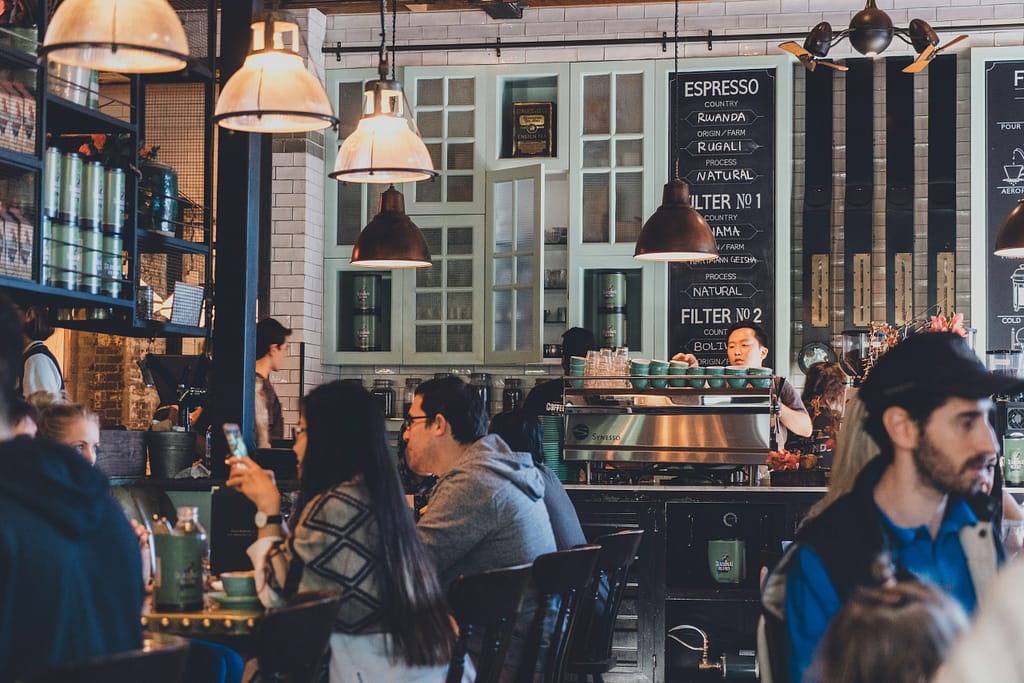
Clues To The Future Lie In The Past
I’m not suggesting we all return to growing our own food, sewing our own clothes, making our own furniture, and employing horse-drawn carriages to get around, but I’ll bet we’d enjoy it a hell of a lot more than viewing some animated reality through an endless parade of fifteen-second vertical videos on your phone.
We don’t need to become Amish to rewild our society, but we do need to reject the social isolation of the media landscape and rediscover the joys (and pain) of an authentically lived life. The promise of AI, and much of the recent push towards nascent technology, is that it removes all the obstacles and pain points by doing the work for us, but once you remove all the pain, there is no foundation for understanding joy. I wrote about this recently in a piece called “We Like It Hard.”
“If you choose not to find joy in the snow, you will have less joy, but the same amount of snow”
— Ancient Proverb
Nearly 80% of all businesses in America are service-oriented. We are no longer a manufacturing society and have long since abandoned human-scale agriculture. Most businesses don’t make anything, but provide service on, or distribution of, products sourced by others. Therefore, you could argue that nearly everyone is in the business of being hospitable to their customers and creating the best possible experience.
Unfortunately, that is not the reality that most of us experience. The good news, at least for those paying attention, is that this gap provides a clear opportunity for those willing and able to focus on the customer experience rather than the transaction. This should apply to everyone, but at present, it clearly does not.
There was a time when no one would have dreamed of making something self-service, as the service was half the point. We stripped out the humanity from every transaction we could and then wondered why the transaction felt so empty and meaningless.
The more people began working in large, faceless companies, processing orders for widgets, the less we interacted with actual human beings, and so the pride we felt in our work was diminished. We didn’t own the store. We didn’t even see the customers. Our entire lives became a transaction based on a notification stemming from an evolutionary desire to feed the machine. We became rats on a wheel, stopping occasionally to press the lever for a treat, before continuing on our journey to nowhere.
Rediscovering Our Humanity In Third Places
In 1989, the American sociologist Ray Oldenburg coined the term “third place” to describe the importance of communal spaces that were neither home (first place) nor work (second place). In his book The Great Good Place, Oldenburg argued that third places were critical to a healthy society, being central to democratic ideals and civic pride, and that the loss of places like pubs, general stores, and other community meeting houses was causing a decline in our sense of community, a loss of civility, and a rise in terminal isolation.
The most famous example of a business trying to adopt this principle was Howard Schultz, former CEO of Starbucks, who used the concept as the foundation for expanding the coffee houses all across America, inviting legions of laptop-wielding patrons to plug in and hang out. The result, unfortunately, was rooms full of people on devices communicating to others who weren’t there. But they did sell a lot of coffee.
Both the pub and the church used to be these invaluable third places that offered an egalitarian space where people of all walks of life and economic classes could come together for conversation, gossip, laughter, and camaraderie. They anchored the community and fostered additional outlets such as softball teams and bowling leagues. Whether it was the church pew, bar stool, you could find bankers and butchers, sitting side by side with scientists and street sweepers, discussing the matters of the day. Indeed, many of these places were often segregated by gender and race, but they existed in every community nevertheless and were central to civic society.
Today, the number of young people who are choosing not to drink alcohol is on the rise, which at first was heralded as a positive, healthier movement. Membership and association with churches in America has also been on the decline, as fewer people identify as religious than ever before. There are fewer places for us to socialize, and fewer issues that bind us together in a common cause. We have lost our sense of community. We belong to nothing.
This is not to say that you have to drink or be religious to have a sense of place or be part of a community, but if you don’t replace the central factor of town life with something else, you get exactly what you see now. Isolation, depression, anxiety, fear, and polarization.
One of the key factors Oldenburg observed in small town life from previous decades was that there used to be more places to gather where commerce was not the primary driver. People met on park benches on Main Street, hung around the general store, or milled about outside the post office. Teenagers played cards in diner booths for hours, and everyone went to the football game on Friday night. The most successful third places were often businesses, but the real business being done was talking. Financial transactions were secondary or nonexistent. The primary function of a barbershop might be getting your hair cut, but the main benefit is the sense of community you feel by being involved in the conversation, what the Irish call the craic.
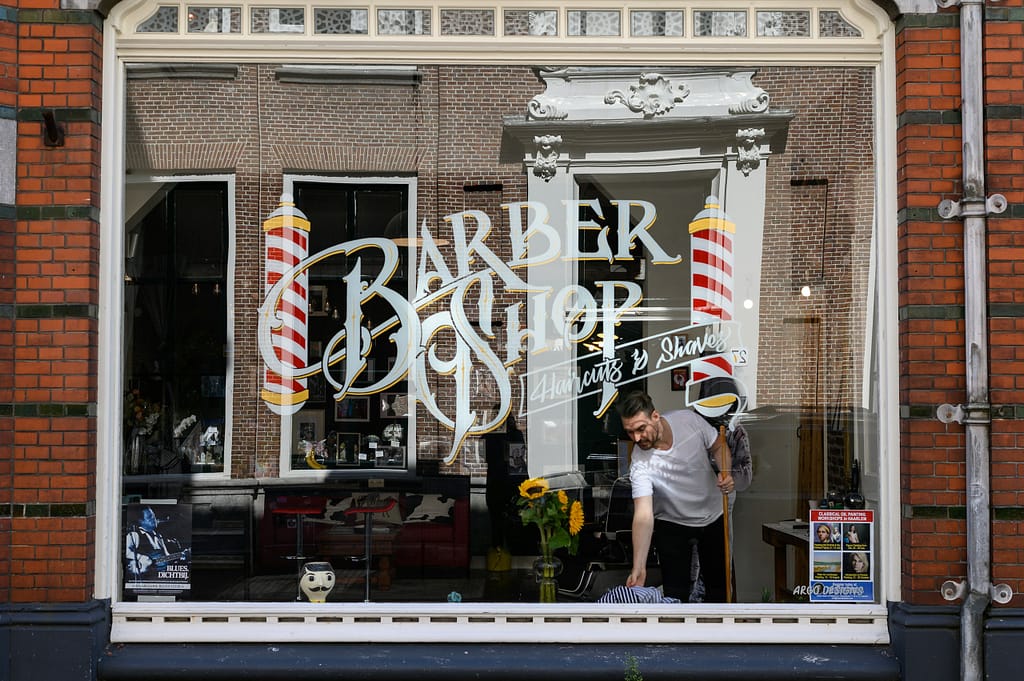
The Lost Art Of Lingering
It’s not just our isolation or lack of community that is stressing us out and making us feel anxious, but it’s the speed at which modern life moves in the digital age. The machines we have surrounded ourselves with were not built for human scale, so we’ve been encouraged to optimize everything for efficiency and effectiveness.
The ideal, we are told, is to move through life as quickly as possible, removing all friction while avoiding any obstacles, so that we can produce more with less, thereby achieving our goals in record time. The problem is that no one has any idea where we’re going or why.
It’s not just that we have no place to go and nothing to do, it’s that we are being urged to get there expeditiously and get done whatever it is we’re supposed to be doing, so we can move on to the next thing. There is no time to think, feel, or reflect. We’re all on a very tight schedule on our well-worn path to nowhere.
We have lost the art of lingering.
Talk Is Cheap
In the nearly forty years since Oldenburg’s original conclusions, things have obviously gotten significantly worse. The vast majority of the population exists in isolation, from detached homes to private cars to remote work, we have lost nearly all our natural means of developing communities. We have endeavored to secure our privacy so completely that we no longer have public lives. We don’t know anyone intimately, and no one knows us. We exist in isolation and wonder why we lack unity, compassion, and empathy. We need to find our way back to third places, one way or another.
According to Oldenburg, to be a true third place, the following criteria had to be met: Open and Inviting. You don’t need an invitation or appointment, and you can come and go as you please. Comfortable and Informal. You feel that you belong there. Convenient. It’s close enough to visit often, ideally right in your own neighborhood. Unpretentious. Everyone is on the same level, there’s nothing fancy or fragile, and it’s not expensive. There Are Regulars. A lot of the same people can regularly be found there, and usually, there’s a host of some sort who greets people as they arrive. Conversation Is The Main Activity. Discussion, debate, and gossip are all part of the mix. Laughter Is Frequent. The mood is light-hearted and playful. Witty banter is encouraged.
The big takeaway for me, apart from just how dramatically society has changed in such a short timeframe, is that conversation is the key. It’s easy to understand how pub culture came to be. Public houses were the natural gathering place for every village and community. Alcohol was the social lubricant, but dialogue was the glue that bound them together. The fact that beer was cheap and you lived around the corner made things much easier than today, but it was a place to talk, even more than a place to drink, and it drew people from all segments of society. Everyone was equal at the pub.
First, you need a space, and in order for that space to exist, it must have a commercial function to support it. It must somehow remain accessible to all, both culturally and financially, and you need a proprietor who believes in the idea and is comfortable playing host to a wide variety of people. Second, you need people willing to waste their time by lingering and to do so regularly, and those people have to be interested in having a dialogue with others. It’s all about the craic. If you want to sit quietly and read, go to the library. Finally, everyone has to be willing to slow down. You can’t be in a hurry when you’re lingering, and a text is not a conversation. We need to embrace inefficiency and vigorously pursue the lost art of wasting time.
There might not be one single piece of commerce that will solve this problem, and it’s not clear that we can manufacture our way out of it, but there are a few things we can consider when trying to create new spaces for community engagement. They need to be accessible, affordable, universal, and approachable; they need to attract a regular group of local residents, and they have to encourage dialogue. It’s possible that we will need to ban digital devices, either by fiat or through social pressure, so that we don’t all end up sitting alone but together, staring at our phones.
I can imagine a number of uses that might allow for a more authentic experience to emerge if encouraged, including laundromats, barbershops, coffee shops, bars, and social clubs. We’re already seeing bookshops in bars, coffee shops in laundromats, barbershops, and cafes. Create a welcoming environment that encourages lingering and dialogue around a basic economic function and invite the neighborhood to slow down and join you.
A better life is possible. All we have to do is slow down and enjoy it, so we’ll actually have something to talk about. I’ll see you down there. I have stories to tell.
Follow David Todd McCarty on Mastodon.