
“Two roads diverged in a wood, and I took the one less traveled by, and that has made all the difference.”
Robert Frost
Without adversity, there is no spirit of accomplishment or faith in our ability to overcome, and therefore, no joy
Let’s be honest, shall we? We like it hard. Not too hard, mind you. We want to be spanked, not beaten. We appreciate a little adversity. We enjoy a respectable challenge. We relish a job well done and celebrate triumphs over tribulations. We prefer life when it’s a little hard. The only shame is in not playing the game.
The optimization mafia, with all their tech-bro supplicants and life-hacking apologists, has convinced our overheated culture that the path to a better life experience involves eliminating any and all friction and removing every obstacle from our lives. They seek a boulevard of unbroken dreams.
The problem is, this is not how the human brain has evolved to function, and consequently, it doesn’t make us happy. We are not logical machines, but emotional animals, and our minds get restless if we don’t have a task to complete or a problem to worry over. Contentment requires the sense of accomplishment that comes from finishing a task requiring expertise, critical thinking, or experience. We don’t like busy work, but we do enjoy problem-solving.
It’s the reason why retirement is so difficult for so many. We’re not built to sit around, doing nothing. It’s fine if you no longer want to be at the mercy of some feckless corporation, but you still need a job to do, even if it’s nothing more than keeping those bloody squirrels away from the goddamn bird feeder. We need to be busy, even when we’re sitting still. I tend to read and write, my ass firmly planted in the seated position, but I’m busy as hell.
It’s not just that we need things to occupy our minds. Our sense of accomplishment, and therefore our level of joy, is directly related to the degree of difficulty involved. No one expects a pat on the back for taking out the trash; that was merely the bare minimum expected of us, but when we tackle something that requires a little more skill, finesse, experience, or troubleshooting, we get that little jolt of dopamine. We look around for applause, though it rarely comes, but we know. Oh, we know.
“They’re here.”
It was 8 am when I got the text. I had been expecting it around 9 am, prepping me for a 10 am arrival, and here it was two hours early. I was completely unprepared. I was wearing house clothes and slippers, drinking coffee in front of the fire, barely awake. It was in the 20s outside and windy, not fit for man nor beast. Now, I had to scramble. I hate scrambling.
I didn’t need a lot of gear, but I like to be prepared for the unknown, and one of the things I would have brought, other than warmer clothes, was my Gorilla Pod. This is a type of flexible tripod with legs that bend and wrap around things. You can stick it almost anywhere and can be a handy tool for certain occasions. The problem was, it was nowhere to be found. For something I didn’t really need, I still spent an inordinate amount of time looking for it, but to no avail. I finally left without it.
All went well, although it was entirely too cold for such an outing. I was filming the installation of two larger-than-life, marble statues at my friend Stan Sperlak’s farm and sculpture garden down the road. Six crew, a massive crane, and several tons of white marble. Quite the operation, so I was documenting it for my friend, a local artist.
In the end, I did not miss the Gorilla Pod, but it bothered me that I’d lost it, or at least couldn’t figure out where it was. I rarely lose things or even misplace them. Others move them, and then I can’t find them, and when I say others, I mean my wife—sometimes, the grandchildren. I even looked up how much it would cost to replace it, and it was almost $200. Fuck that. Now, I was really upset. Several times, throughout the day, I looked in the places I’d already looked, certain it must be somewhere. I would try to picture in my mind where I’d last used it, where I’d last seen it. Then I had an epiphany.
One of the places I first looked, when it wasn’t out in the open as it usually would be, was the plastic tub that my wife had filled when she was attempting to vacuum my office. I looked there almost immediately, but after a cursory look at the things on top, I concluded that it couldn’t be in there because I’d used it far more recently than even the objects on top. My epiphany came when I realized that I had not packed this storage bin; my wife had, so I had no real idea what was in it. I went back upstairs, opened up the lid, and began taking everything out. Sure enough, there at the bottom was the thing I’d been searching for.
It was lost, but now it was found, and I couldn’t have been happier. It made my day, and I didn’t even use it. Why was this the thing that gave me joy? Because I had walked through the valley of the shadow of death and come out the other side. I had cheated death by falling into despair and then finding my lost sheep again. It’s deeply embedded shit, let me tell you.
As a species, we have a long history of being aware that true happiness is neither sustainable nor perpetual. It’s fleeting, like morning fog or the memory of a dream. We recognize that with light comes the dark, what goes up usually comes down, and that there’s always some bad mixed in with the good. We tell ourselves that without the bad times, we wouldn’t recognize the good ones. This is all true.
We’re intellectually aware of this bit of reality, but in practice, we remain delusional to the point of delirium. We believe that constant happiness is not only within our grasp, but our God-given right. In our minds, we recognize the insanity of such a ridiculous paradigm, but deep in our hearts, we remain dubiously optimistic. We’re romantic optimists, confident there must be a pony underneath all that shit somewhere.
You might remember the hipsters of the early 21st century, and their affection for any analog technology that was outdated, inefficient, and slightly difficult to use or master. Fixed gear bicycles with no brakes. Vinyl records and persnickety turntables. Handcrafted everything, from pickles to bread to boots. Film cameras and single-microphone recording sessions. Manual typewriters and letterform printing.
Not only was everyone searching for authenticity in a sea of synthetic counterfeits, but they also experienced a real feeling of joy from pursuing something that made them earn it. We liked that it was a little hard and that we weren’t being spoon-fed mashed peas.
This is just one of the many issues I have with the promotion of all things artificial, and intelligence is at the top of my list. I would argue that there is no such thing as artificial intelligence. It doesn’t exist. What these self-proclaimed geniuses have produced is an overly complex, power-hungry, Rube Goldberg-esque, guessing machine that takes a mathematical approach to language and communication, but all too often misses the point. It’s like that old Eddie Murphy bit, “Are you people dancing to the words or the music?”
With so much of commerce shifting to an impersonal, online experience, the assumption is we want to order a product and check out as quickly as possible, but this bypasses the important tasting phase. Sometimes we know exactly what we want, and we just buy it thoughtlessly, but often we want to explore a bit, touch and feel things, get comfortable with the idea, if not the reality, of the purchase. We want to “walk around with it,” as my youngest child used to say. We want to hear a little story about it. We want to be emotionally invested.
This is precisely where it gets tricky for so-called “smart” computer programs. They have no emotional intelligence, and if you know anything about how humans make decisions, logic and intellectual knowledge have very little to do with how we choose one option over another. We like to think of ourselves as intellectual giants making rational choices based on logic and cold, hard facts, but really, we’re just emotional wildlings, following our irrational hearts to the ends of the Earth.
I used to work for a guy who was successful financially, but lived a life that was void of any real joy. Despite all his wealth, he seemed unable to fill the hole in his soul, largely because he assumed it was all transactional. Buy this new thing, and it will make me happy. He took no joy in the process but chose the most efficient means to the end. He could decorate an entire home in an afternoon, choosing rooms full of furniture, art, and accessories from showrooms and pages of catalogs. He wasn’t emotionally invested in any of it. It was a task to be completed. Then he wondered why he felt so empty when he was finished.
Let’s say you wrote a brilliant book on your first try, and you did it with relative ease. It just flowed out of you, as if you were merely the typist and barely the author. Let’s say it becomes a best seller and you are celebrated for your talents—toasted as a gifted artist with a bright future. What are the chances that you will be content and confident of your ability to do such a thing ever again? I’d say slim to none, and if you don’t believe me, just ask Harper Lee.
It’s not just adversity or hard work that we require in life, but real failure. There is no high if you’ve never experienced a low. What is a mountain if all you’ve ever known are plains? We have to risk it all and try new things, and it’s patently absurd to think it will always work out in our favor. Sometimes we are going to faceplant, and a modicum of happiness is guaranteed once we understand that this is all part of the game. We begin to welcome failure as an opportunity to learn and grow. Ahh, we tell ourselves, something new.
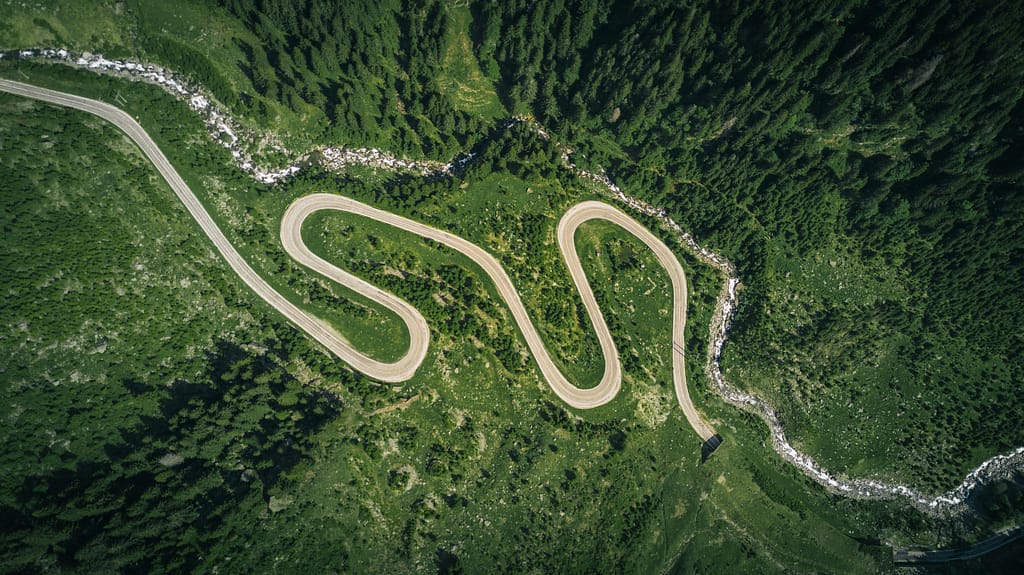
None of us is going to actively seek out failure or pray for diversity. We’re not mad. But we can teach ourselves to be more open to it, and not quite so fearful. We don’t welcome failure, but we don’t become paralyzed by it, either. The easiest path is rarely the most interesting, just as the freeway will never be as interesting as the winding country road. Robert Frost famously wrote, “Two roads diverged in a wood, and I took the one less traveled by, and that has made all the difference.”
There’s something to be said for taking the hard road, at least now and then. It won’t be easy, but it will definitely be more interesting, and if we learn nothing else from this life, it’s that it’s all about the journey, and not the destination. As a wise man once said, “There’s nothing to buy and nowhere to go.” All we have is the experience of living this one crazy life, so it might as well be interesting.
The old song says that no one ever promised us a rose garden, but who ever asked for that in the first place? Too fastidious, if you ask me. Give me the wild meadow, messy, tangled, and out of control. There’s life in that meadow. Sit still and breathe.
You can feel it.
Follow David Todd McCarty on Mastodon.