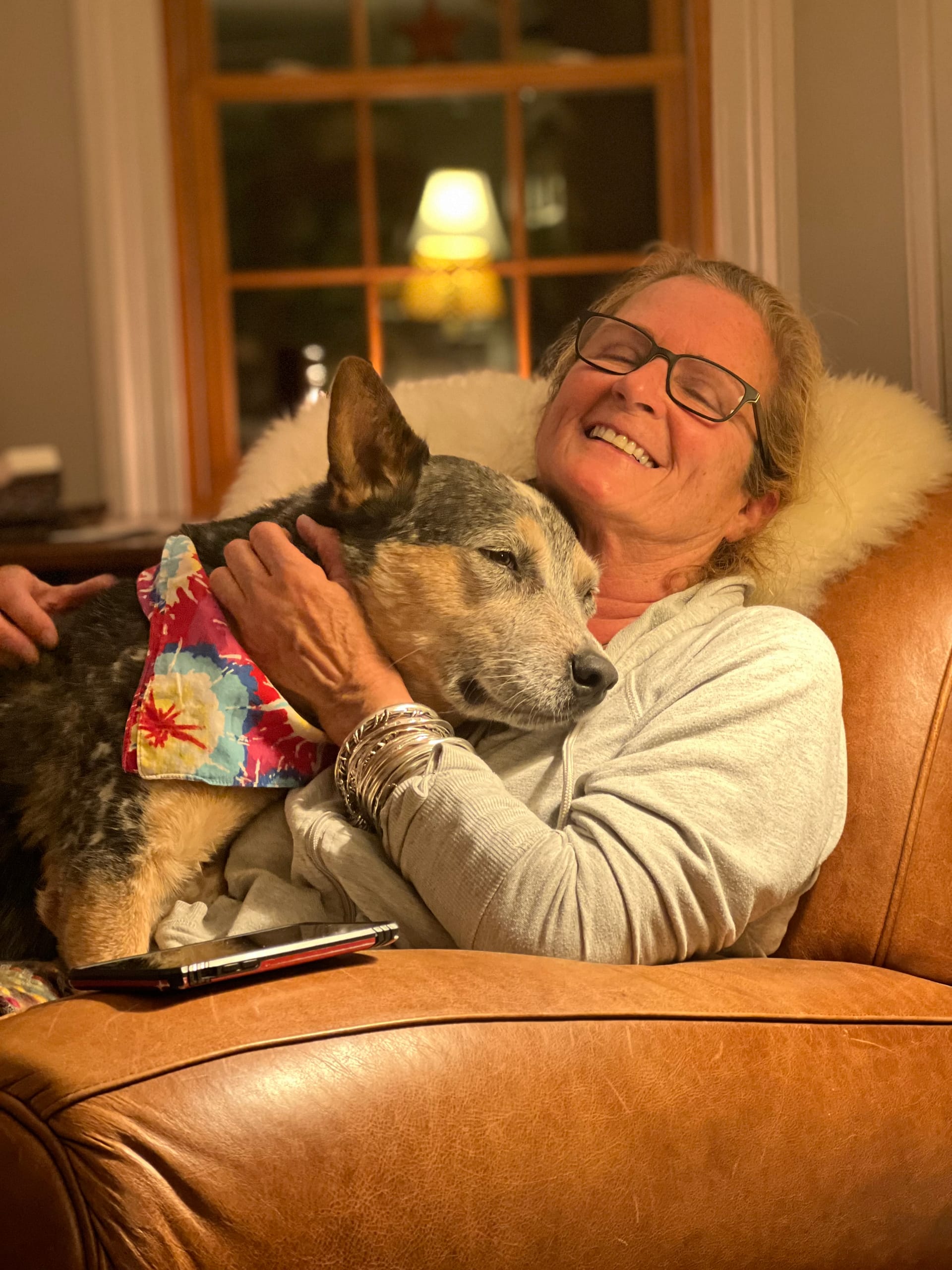
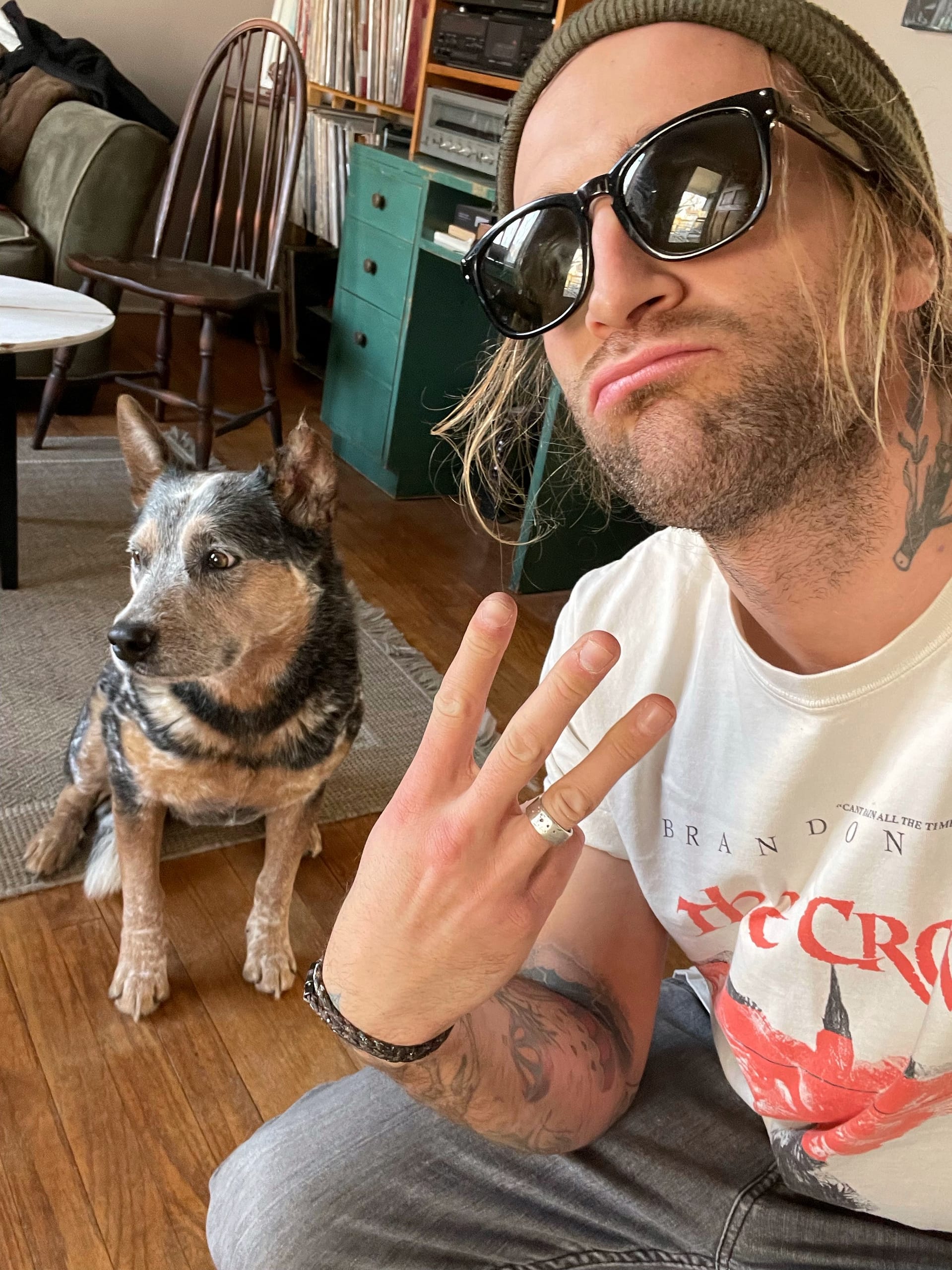
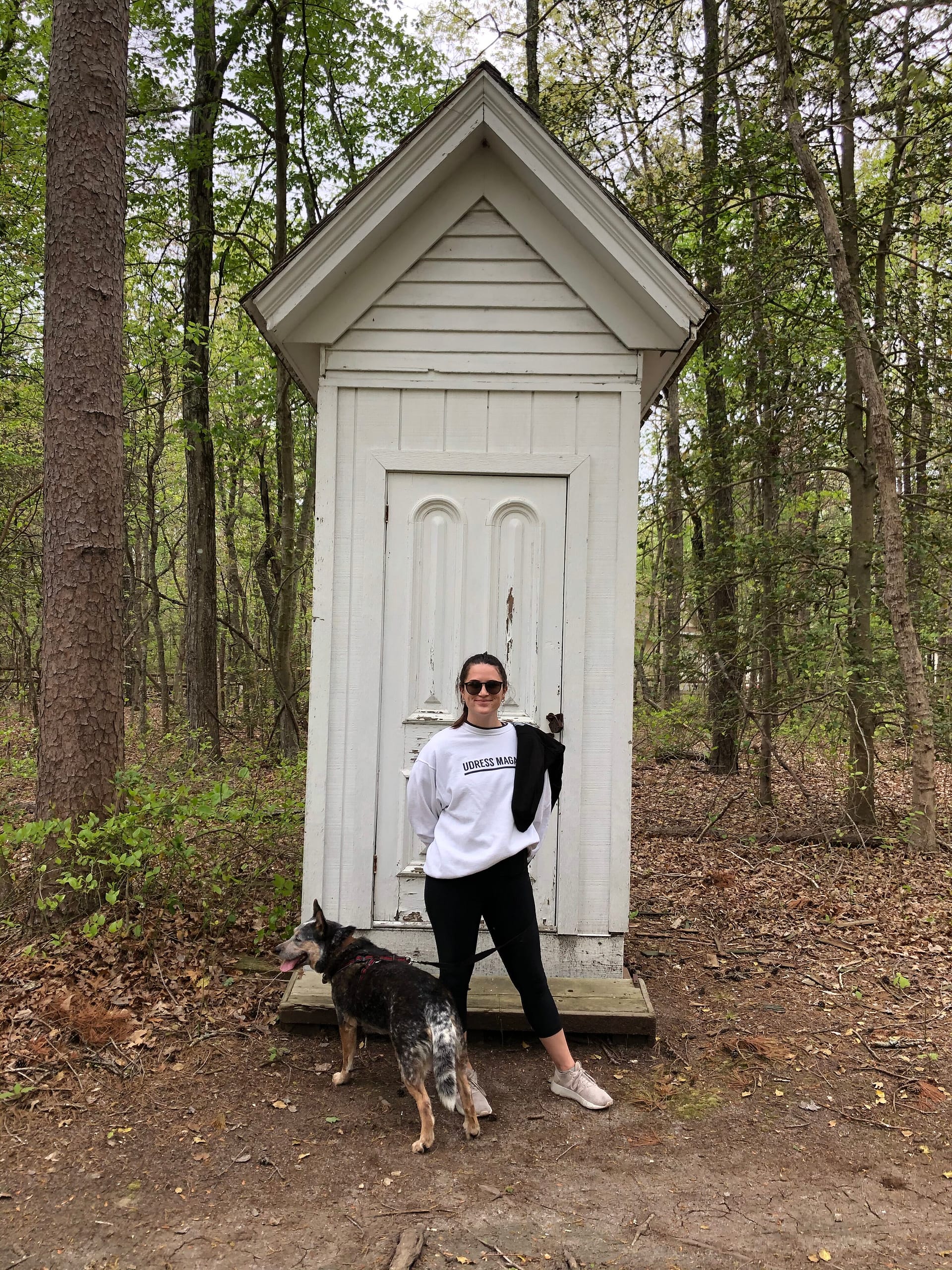
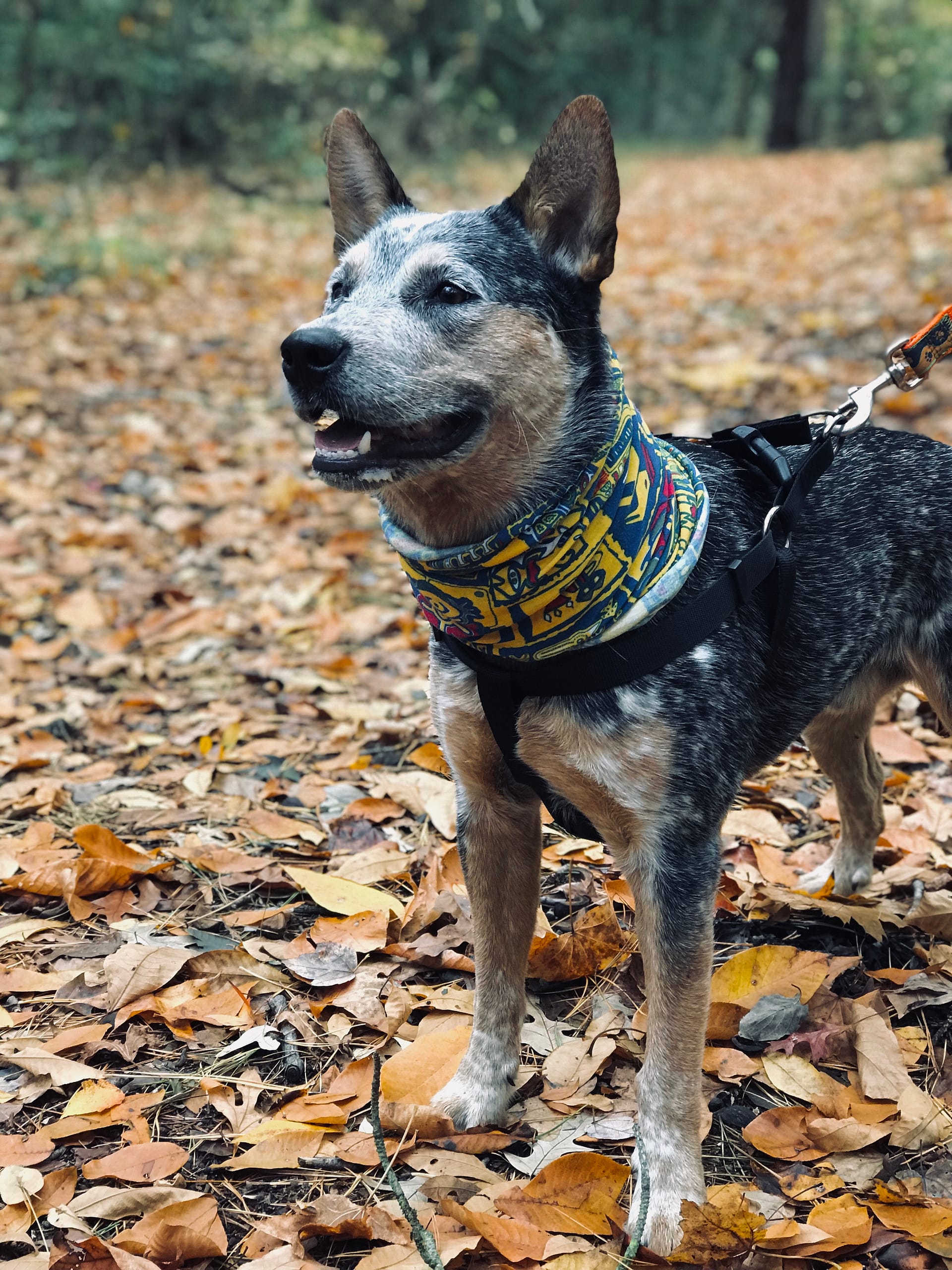
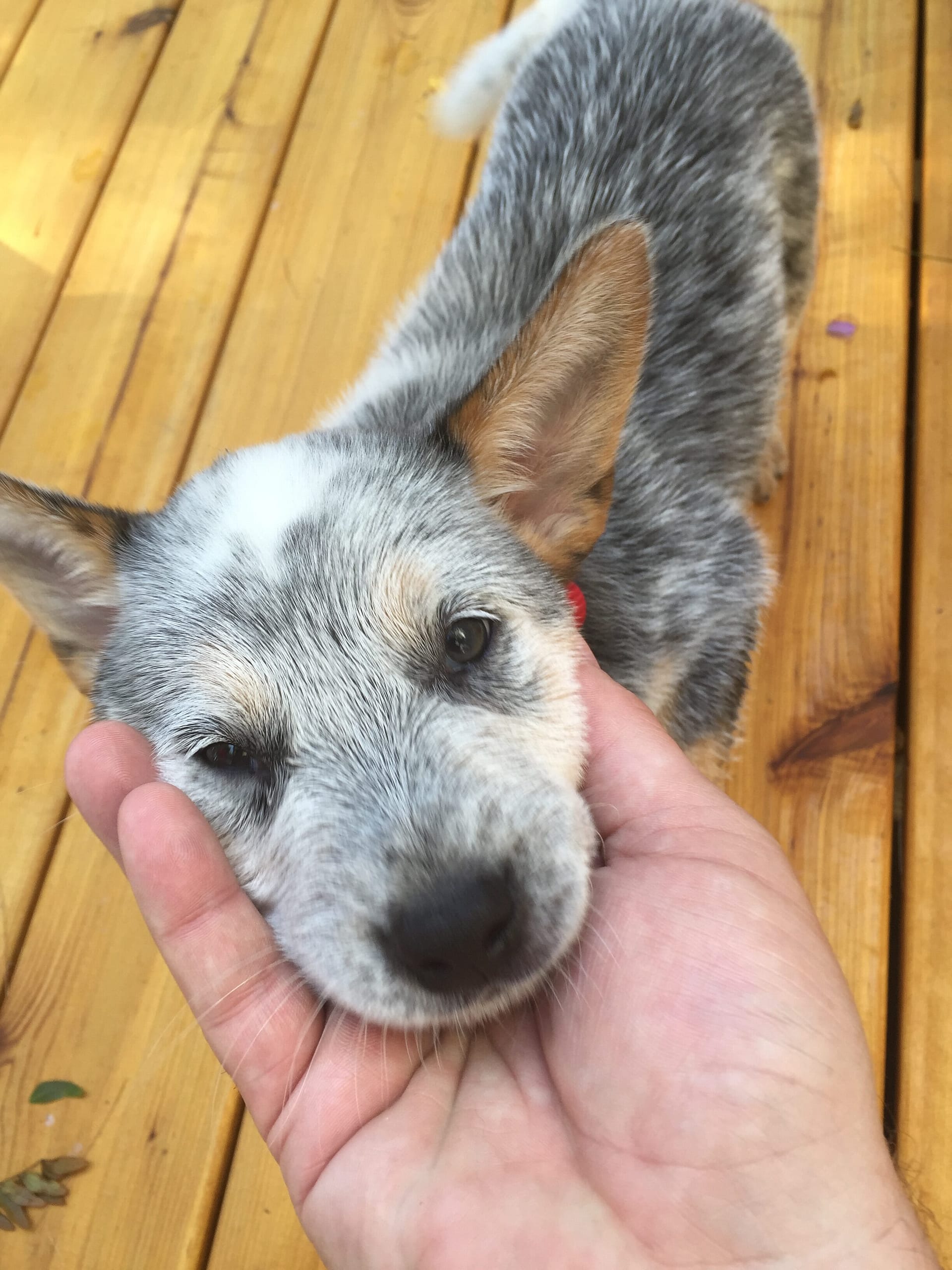
It’s no secret that I was not a big fan of Seven. I grew up with plenty of dogs, though my wife did not. We’d had our own dog, Seamus, an incredible Chow/Shepherd mix, for over 15 years and we loved him well. Seamus had been dead for at least as long as he was alive now, and I had no plans of owning another dog. I certainly didn’t want to babysit one, outside of the occasional sleepover. I also had no plans to start fostering wayward children, feral cats, or rabid raccoons. I was all set.
Seven came to live with us, anyway.
When you think about the unconditional love of dogs, you probably imagine a slightly stupid animal, one that is fiercely loyal, lives to do your bidding, and is always happy to see you. The kind of furry forever-friend that slobbers all over you in fits of ecclesiastical joy, and thinks you walk on water when you’re not turning water into wine.
Seven was not that kind of dog.
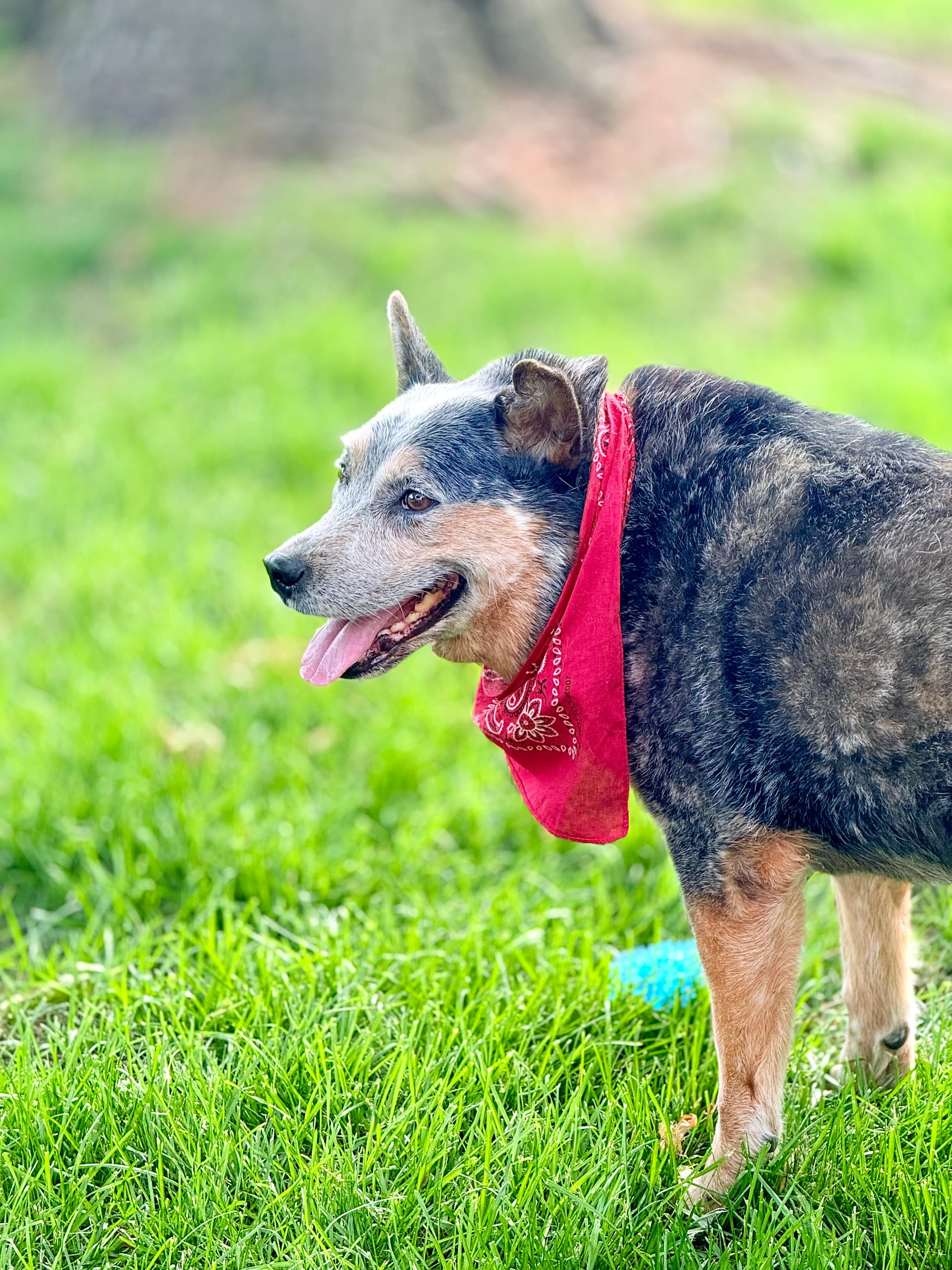
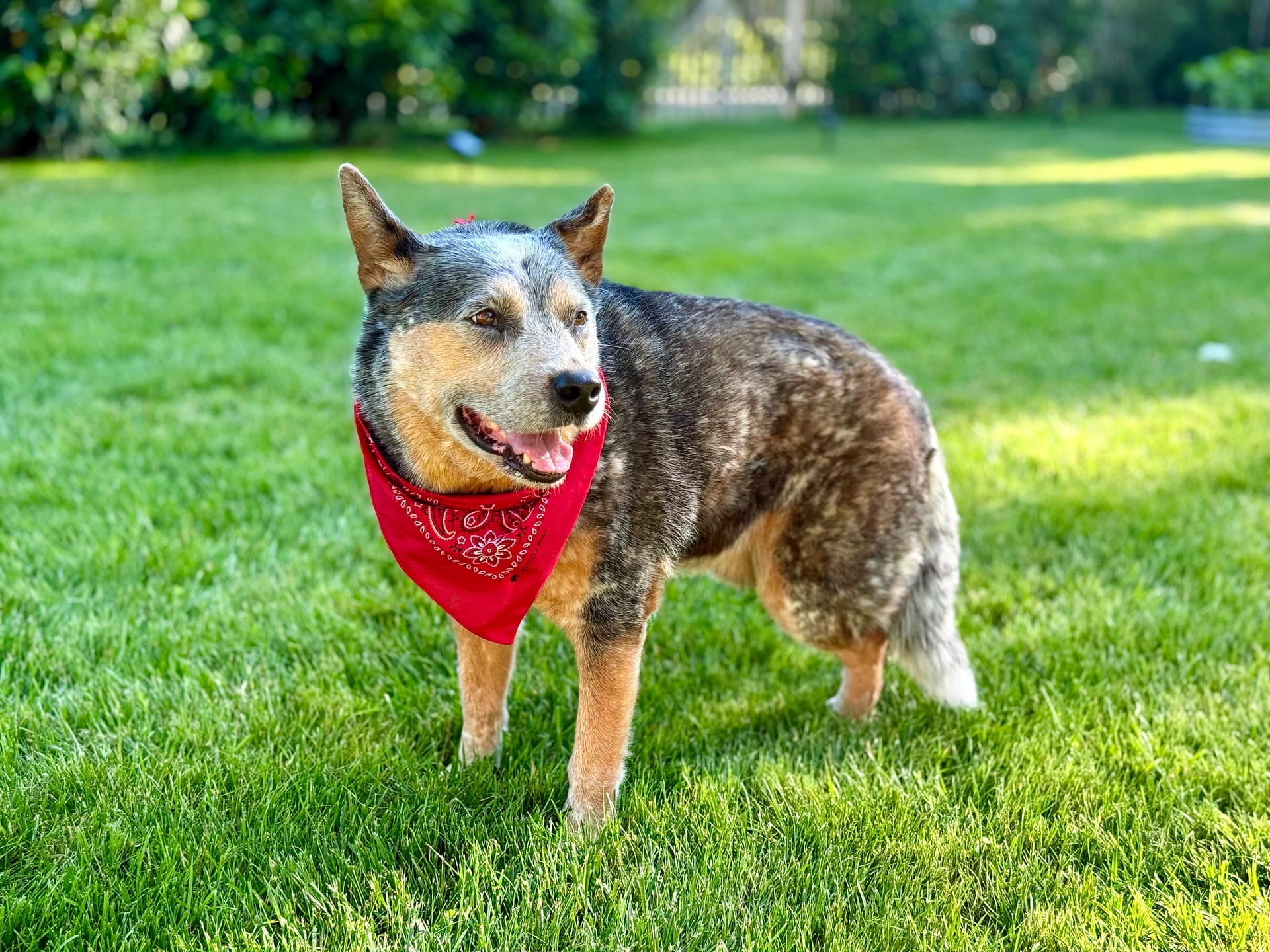
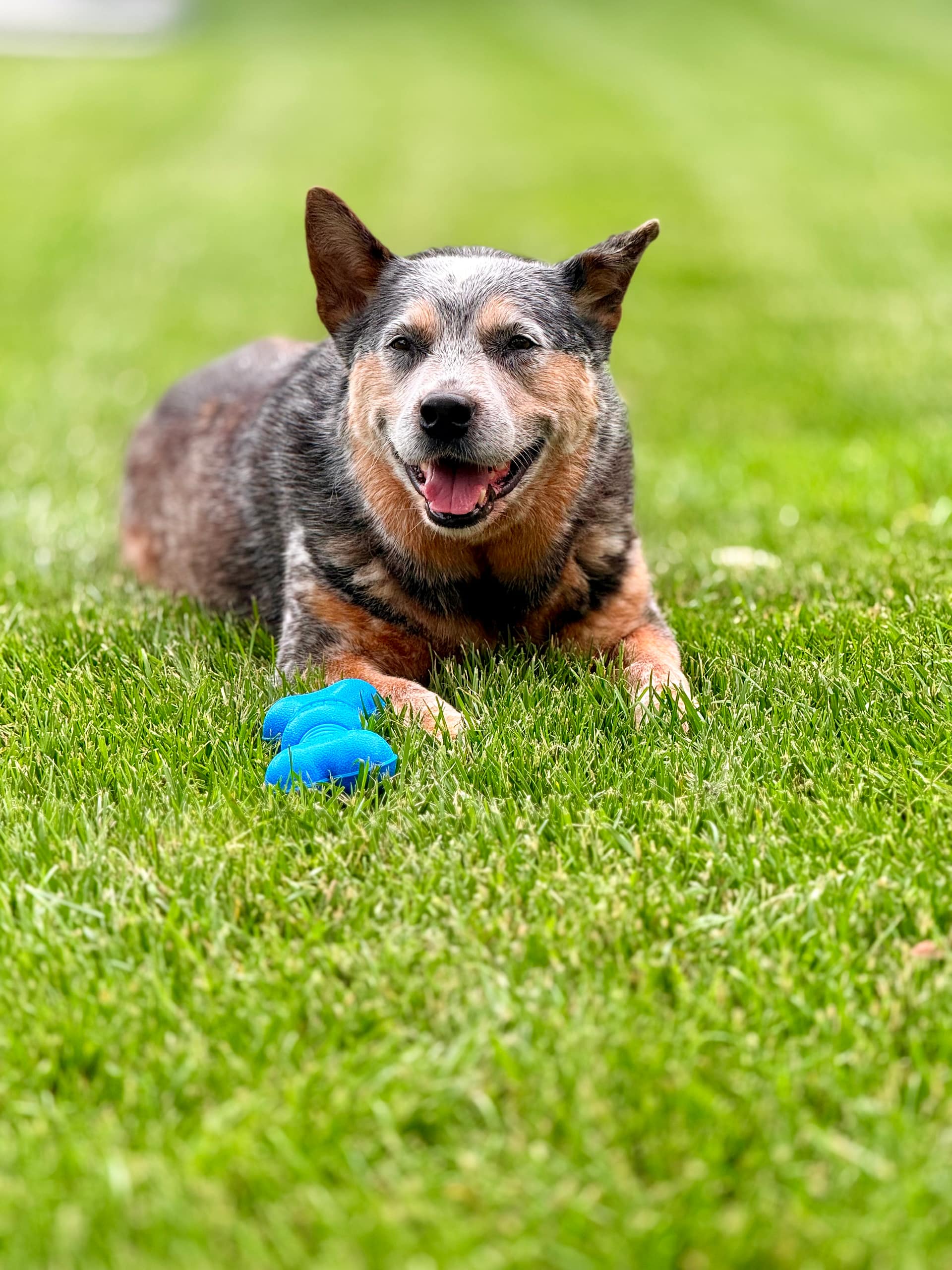
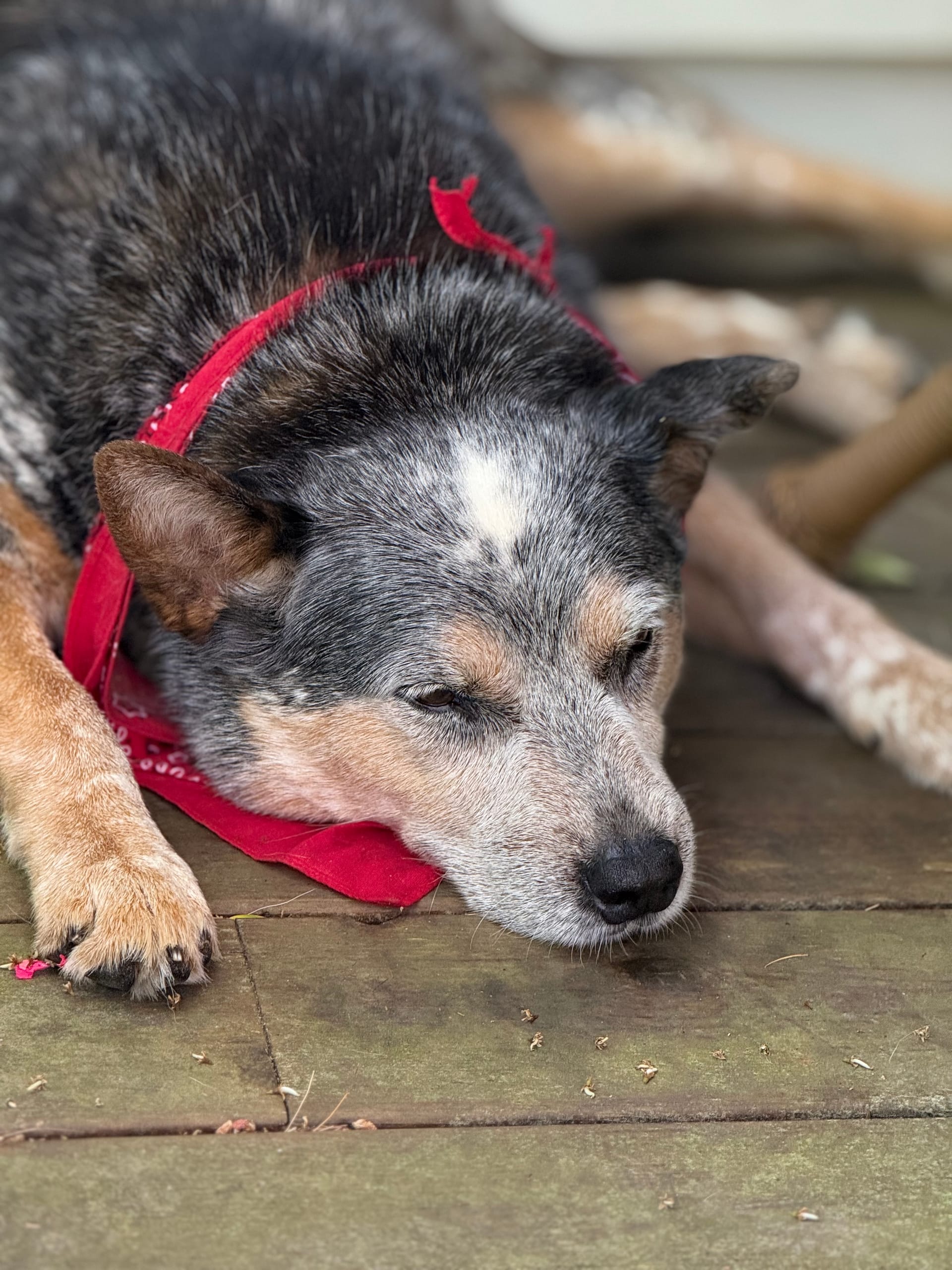
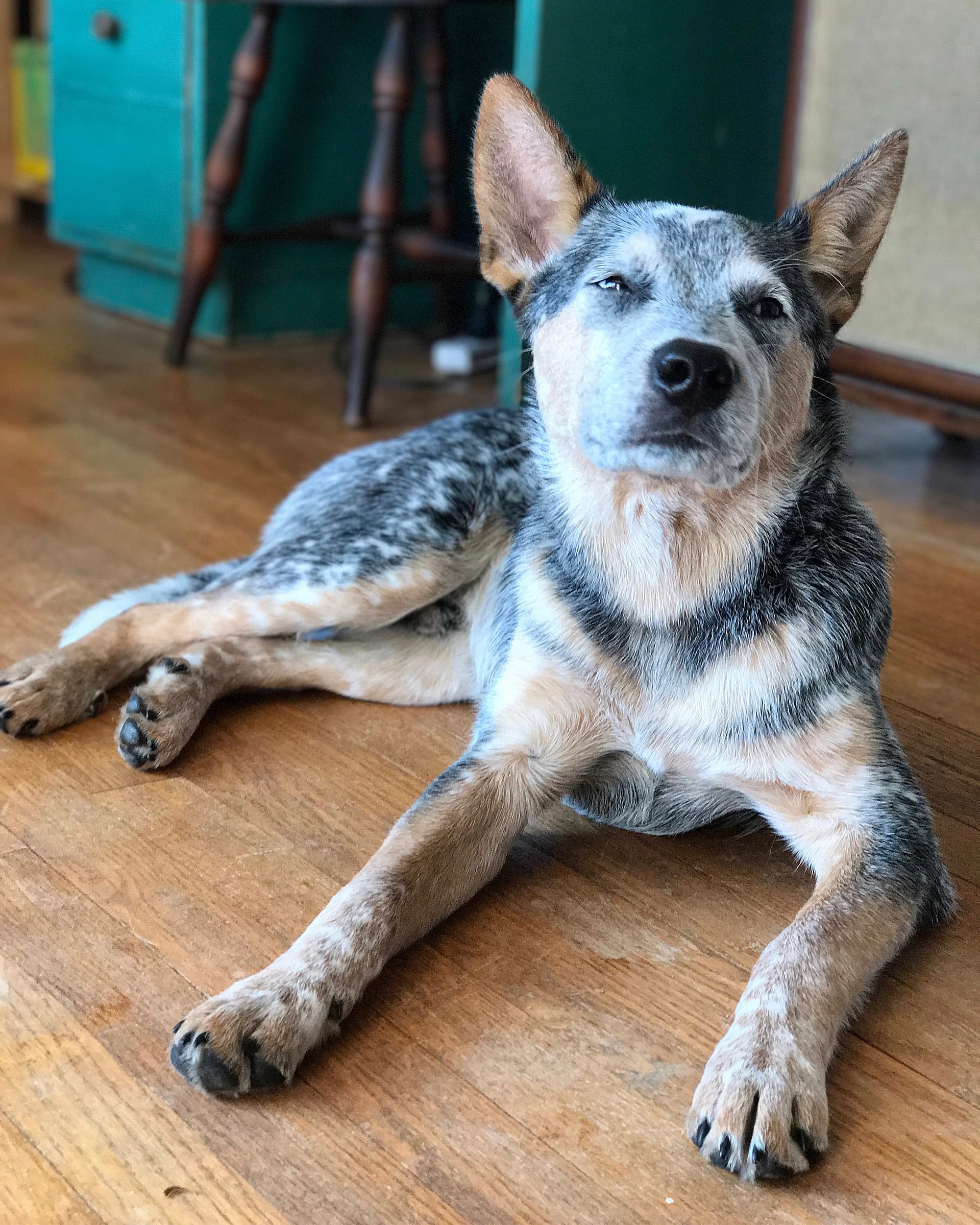
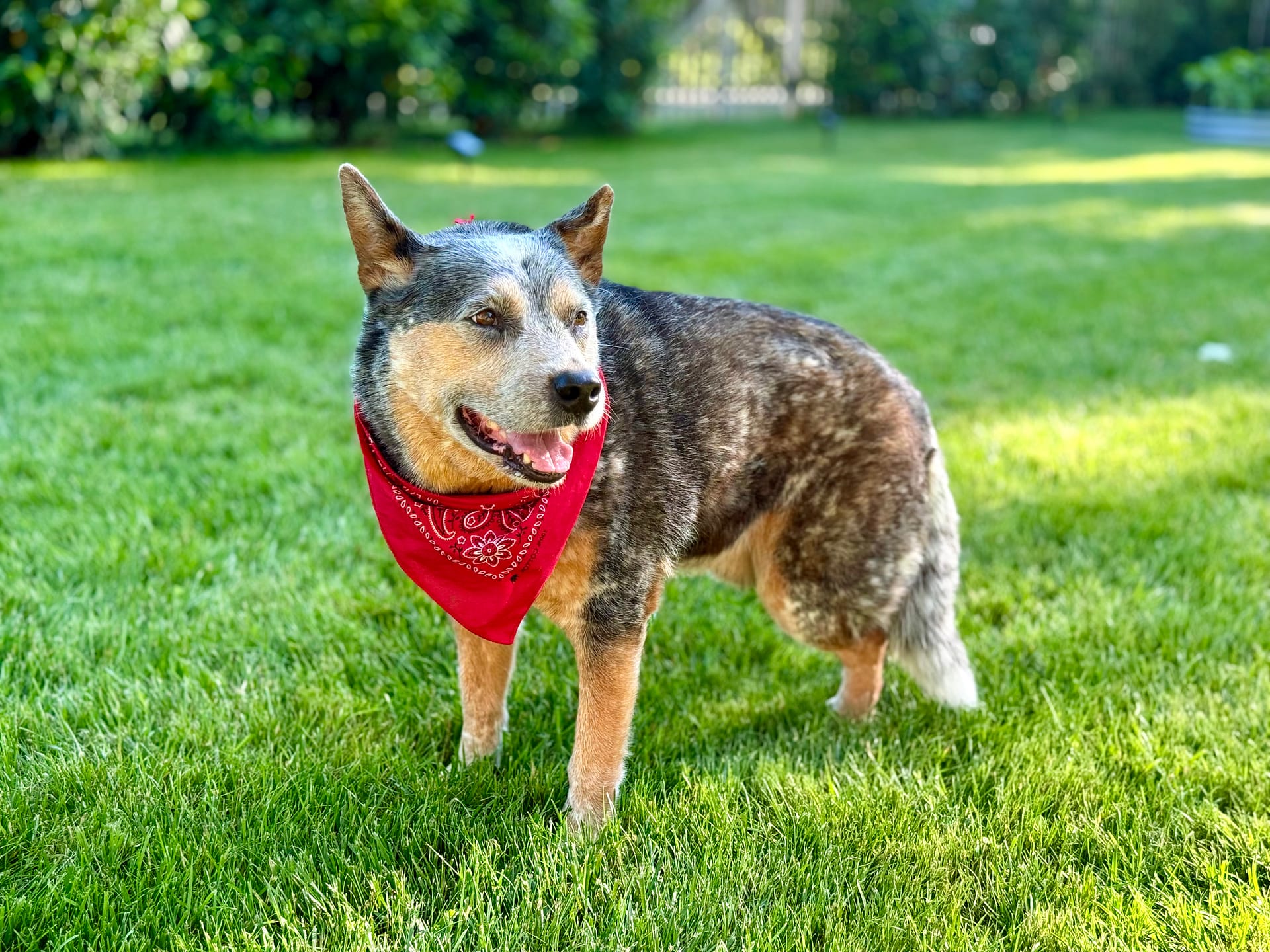
Seven was a Blue Heeler, otherwise known as an Australian Cattle Dog. Despite common lore, they are not descendants of Australian dingos, but were bred specifically to herd cattle by Europeans who had migrated to Australia in the 1800s. They are short but thick, strong and fast, intelligent and independent-minded. They are known to form strong attachments with their owners, and can be both protective and possessive. They’re also known to be mad as hatters and incredibly peculiar.

Seven was not just difficult, he was skeptical, suspicious, and judgmental. He made you earn it, and when I say it, I mean everything. Love, affection, loyalty, and attention. If you offered him something to eat, he’d want to know what was in it, like perhaps you might be trying to poison him, or feed him a vegetable of suspicious and foreign origin. He took nothing on face value, but required his own evaluation and interpretation before he offered his blessing. Often, that blessing was provided hesitantly and reluctantly, but once given, was full and complete.
Seven was not my dog, he was our son’s dog, though I would end up spending an inordinate amount of time with him, especially near the end of his life. We had something of a fractious relationship, often a bit bipolar, and at odd intervals. It was hot and cold and I didn’t seem to have a lot of say in the matter as to where I stood. I was either graced with his affection, for reasons known only to him, or I was given the side eye, a look and attitude he had perfected with precision, that said, “I’m not so sure about you today.”
For a long time, I assumed that Seven’s unusual proclivities were the product of his being raised by my stepson Ricky, another unusual soul that could be difficult, demanded a lot, and could be a bit unpredictable. Ricky is a bit more neurodivergent than most, and doesn’t exactly glide through life with ease, and often struggles with the simplest details of life. In fact, they were so similar in nature, Ricky and Seven, that it was hard not to ascribe the personality of attitude from one to the other. If we all start to look like our pets, why wouldn’t we also begin to act like them, or they Iike us? I began to suspect that Seven might be on the spectrum.
The other major character in Seven’s life was my wife Jane, whom the grandchildren call Uppie. Not only did we dog-sit Seven whenever Ricky was away, but she would regularly collect him for extended walks or just bring him home to enjoy the yard while Ricky was at work. Outside of Ricky, no one spent as much time with, or was as close to Seven, as his champion and benefactor, my wife. I suspect that it was sometimes to Ricky’s chagrin, but Seven and Uppie shared a strange bond that could only be described as a mutual admiration society. They simply adored one another.
Seven was named for a Seinfeld bit from the television show that for some reason tickled Ricky. George Costanza tells his fiancé that he wants to name his son, should he ever have one, in honor of baseball legend Mickey Mantle. He doesn’t want to name him Mickey or Mantle, but Seven, this being Mantle’s number with the Yankees. George’s fiancé predictably refused to go along with George’s infantile fantasy, so Ricky took up the mantle, so to speak, and this only added to the legend.
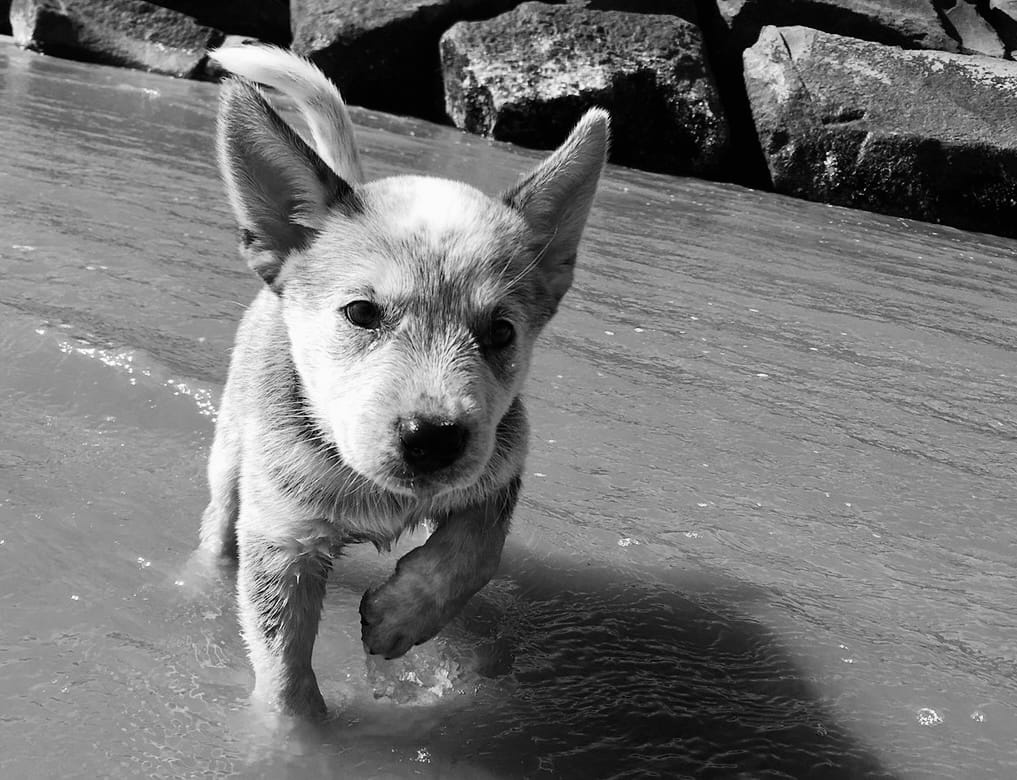
The thing about Blue Heelers, is that they’re work animals and not really designed to be pets, at least not of the easy going variety. They are intense, high-strung, and generally in need of a job to do. They are both easily bored as well as endlessly relentless. They are smart but stubborn, playful but diligent. They know what you want from them but that doesn’t mean they will always comply. They’re great at herding cattle, but not so great at chilling out in front of the fire.
One of the aspects of Seven that Jane thoroughly enjoyed was his eagerness to go exploring. Jane is a walker, a hiker, and a former runner. She enjoys walks on the beach, through the woods, and across the fields. Seven was a regular companion on these walks, and always eager to chase a ball or perform a trick. My idea of a good dog is one that sleeps a lot, preferably at my feet, and that leans on you as a form of affection. Not a lot of barking, licking, or chasing of anything. I’m looking for a slightly animated sofa pillow, whereas Jane enjoyed a higher level of difficulty.
Seven forced you to deal with him on his terms. He was not terribly interested in your opinion, but he did value your company and participation in anything he was interested in. You didn’t convince Seven of anything. If he went along with your agenda, it’s because he agreed with your approach. There was no obedience, just reluctant acceptance or the occasional agreement.
When Seven was young, he was a somewhat more typical dog, eager to please and inviting of physical affection. Long past his ability to safely be considered a lap dog, he assume that his must be his rightful place. Even at 50lbs, he felt the most natural and comfortable thing in the world would be to place his ass on your chest as you sat in a chair, and looked out at the world together. He didn’t want to be with you so much as inside of you—in your pocket, as Jane used to say. He could be entirely dismissive, or he would want to melt with your soul, and inhabit you. There wasn’t often much in the way of middle ground.
A few years ago, Seven started getting weirder than normal, what some might have even called dangerous. He started snapping angrily and baring his teeth when he got spooked. He was never what you’d have called subservient, but he generally knew his place in the pecking order. Something shifted, or snapped, and suddenly he had hard boundaries that would show up from time to time. He would get into it with other dogs, and I no longer trusted him around children. Honestly, I thought there was something wrong with his mind.
It got to the point where if you touched him the wrong way (which was unclear), he would freak out, snapping, growling and baring his teeth. It was a bit terrifying and one time, he bit me on the ankle. I think it was largely accidental, as he could have done actual damage had he wanted to, but still, he broke the skin and freaked me out. I didn’t trust him again after that, but I did eventually learn to understand him.
After multiple incidents, my wife finally took him to a vet to get checked out. They had to put him under general anesthesia because he wouldn’t let them touch him otherwise. We learned that he had a degenerative back issue that was not caused by any injury, but was simply congenital. It wasn’t going to get better, but they could ease his pain and give him a little more time. They subscribed a course of steroids, along with twice a day pain medication, but warned us that this would be a short term fix, if at all. Somehow, it was decided that Seven would come live with us now, presumably so we could keep a closer eye on him. I work from home and Jane is usually here as well, so I’m sure it made sense.
This was in late spring or early summer and within days, Seven went from sulking under table and growling at his food, to prancing about like a puppy from ages past. Suddenly he was bounding out the door again, chasing balls, cars, and squirrels, and making a general nuisance of himself. His favorite pastime seemed to be going in and out of the back door, and then barking at whichever side he was on, asking to be let through once more. He never tired of this.
At the time, I thought, well, let’s see if we can give him a good summer. It seemed like a reasonable goal at the time, even though I wasn’t sure he would make it that long. You just never know with these things.

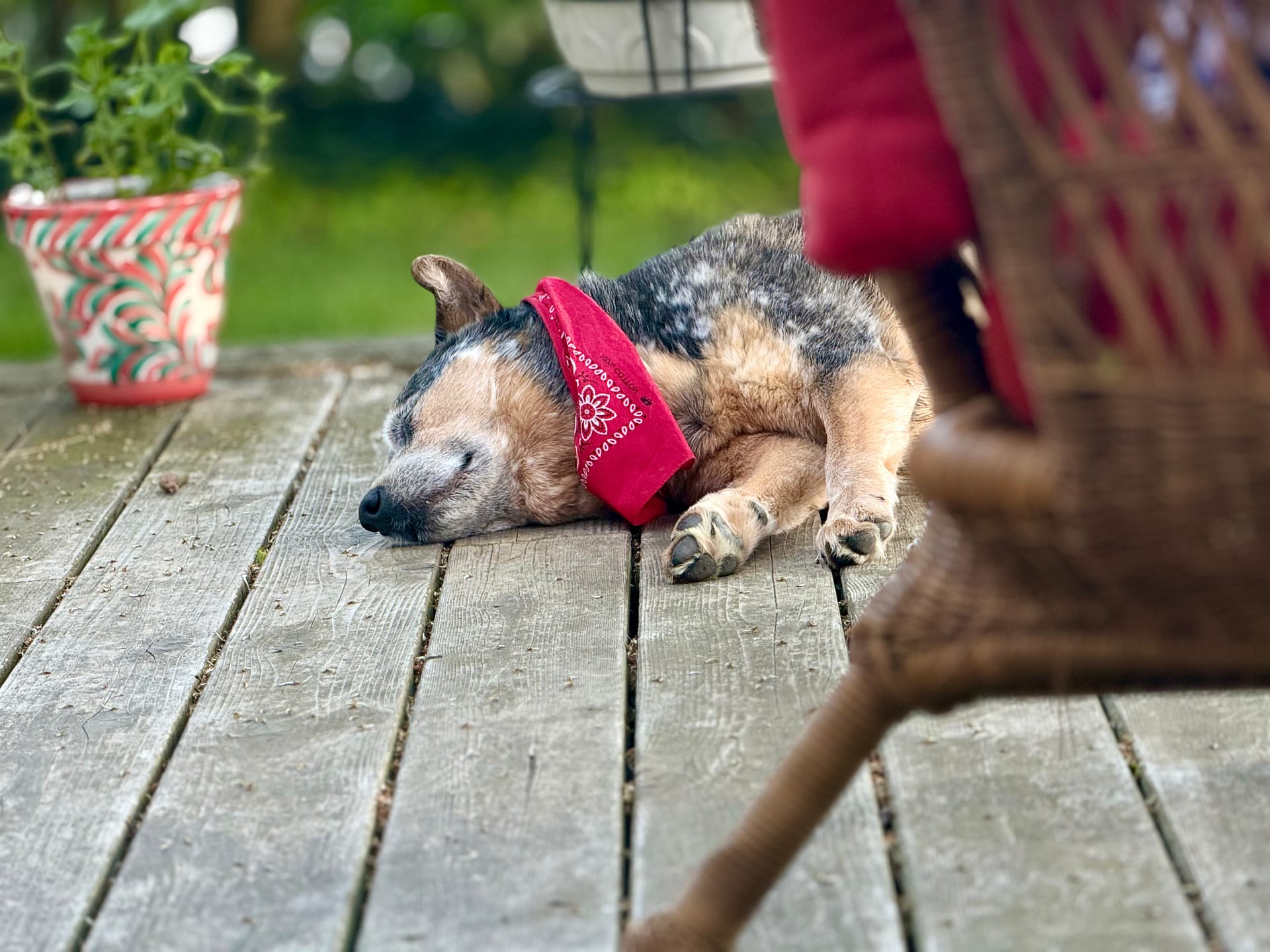
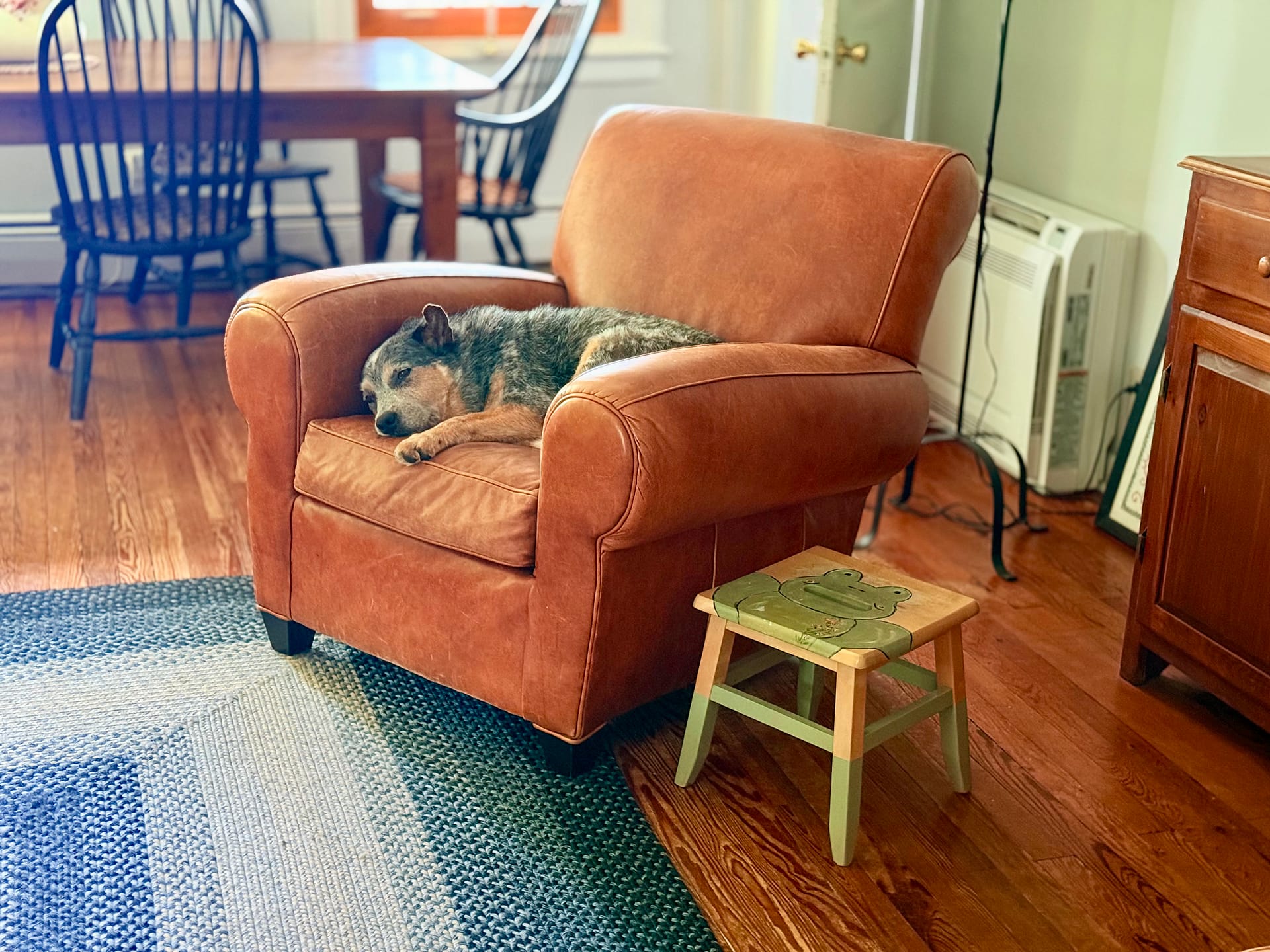
He had his good days and not so good, but mostly he seemed content. A lot more sleeping and laying around, but not completely. He would get spunky and want to play around. He’d occasionally get up in your grill and ask to be pet, but we’d learned by then that this was a no win situation. He was reacting to the memory of pain and his reactions were entirely defensive. We learned to talk to him kindly but avoid touching.
A few weeks ago, he began declining again. He had trouble keeping his footing on the hardwood floors and back deck. His back end looked like it was being driven by someone different than was driving the front end, like Kramer was back there driving the ladder rig on the fire truck. Yesterday he could barely stand.
Ricky left work early and came to spend time with Seven, and even cooked him a steak. Our girls stopped by and paid their respects. At some point, the veterinarian came and put him down. I stayed upstairs. I thought it was best to let Jane and Ricky say their goodbyes alone. I had been down this road with a dog before and I didn’t want to do it again. It was not how I wanted to remember him.
Seven was buried in our backyard, on a little mound not far from the chicken coop. It’s the highest point in our yard, such as it is, and from there he can watch over the entire yard, keeping track of our comings and goings, while guarding the chickens and protecting the yard from squirrels.
I am reminded of the final scene from the movie “Out of Africa,” where Karen Blixen is recounting her time in Kenya, on a farm at the foot of Ngong Hills:
“Mail has come today and a friend writes this to me. ‘The Maasai have reported to the district commissioner at Ngong, that many times at sunrise and sunset they have seen lions on Finch Hatton’s grave. A lion and lioness have gone there are stood or lain on the grave for a long time.
‘After you went away, the ground round the grave was leveled out into a sort of terrace. I suppose that the level place makes a good site for the lions. From there they have a view over the plane and the cattle and the game on it.’
“Denys will like that. I must remember to tell him.”